Female Hair Loss: Causes, Tests, and Effective Treatment Options
Noticing more hair than usual on your pillow, in the shower, or on your hairbrush can be worrying. For many women, the concern becomes more noticeable when their ponytail feels thinner, their scalp becomes increasingly visible, or their hair no longer has its usual volume.
Although some daily hair shedding is completely normal, persistent or excessive hair loss may indicate an underlying issue that deserves attention.
Female hair loss causes can range from hormonal conditions such as Polycystic Ovary Syndrome (PCOS) and thyroid disorders to iron deficiency, genetics, stress, and changes in the natural hair growth cycle.
The important thing to understand is that not all hair loss is the same. Some types are temporary and improve when the underlying trigger is addressed, while others may gradually progress without appropriate treatment.
At Aesthira Aesthetic, Indirapuram, Ghaziabad, hair and scalp consultations focus on understanding individual concerns before recommending suitable treatment options.
This guide explains the common causes of hair fall in women, the signs to watch for, the blood tests that may be recommended, and the treatments that can help manage different types of female hair loss.
What Causes Excessive Hair Loss in Women?
Excessive hair loss in women can be caused by genetics, hormonal changes, thyroid disorders, iron deficiency, PCOS, illness, childbirth, stress, certain medications, or scalp conditions. The cause often depends on whether the hair is shedding suddenly, thinning gradually, or falling out in patches. Identifying the pattern is the first step towards choosing appropriate treatment.
Hair loss generally presents in three main ways.
1. Excessive Hair Shedding
Hair shedding happens when strands fall out as part of the natural hair growth cycle.
However, certain physical or emotional triggers can push more hairs into the resting phase, causing increased shedding.
You may notice:
- More hair falling out during washing
- Hair collecting on your brush or pillow
- A sudden reduction in hair volume
- Increased shedding across the entire scalp
This pattern is often associated with a condition called telogen effluvium.
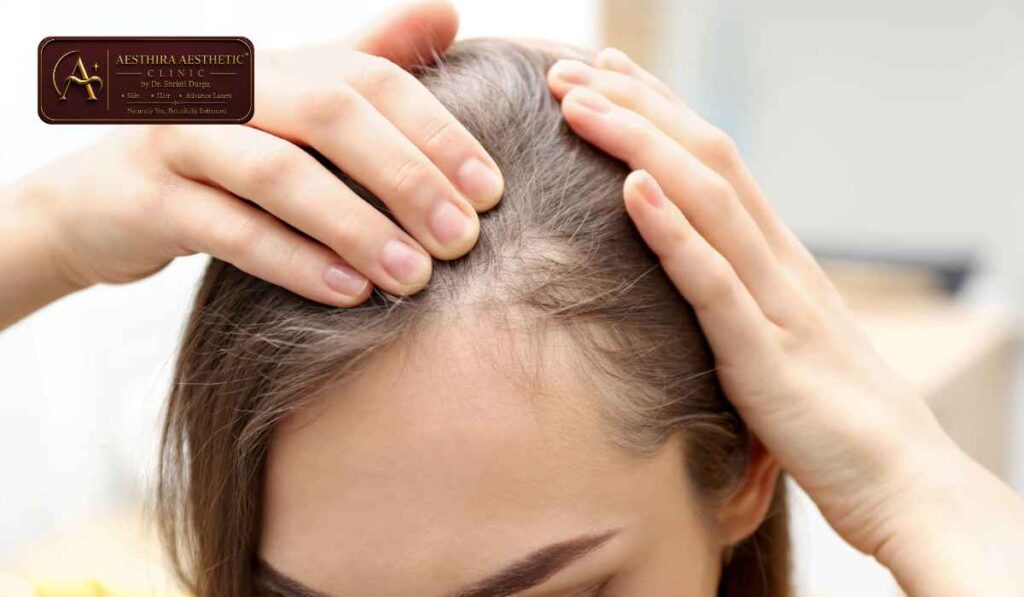
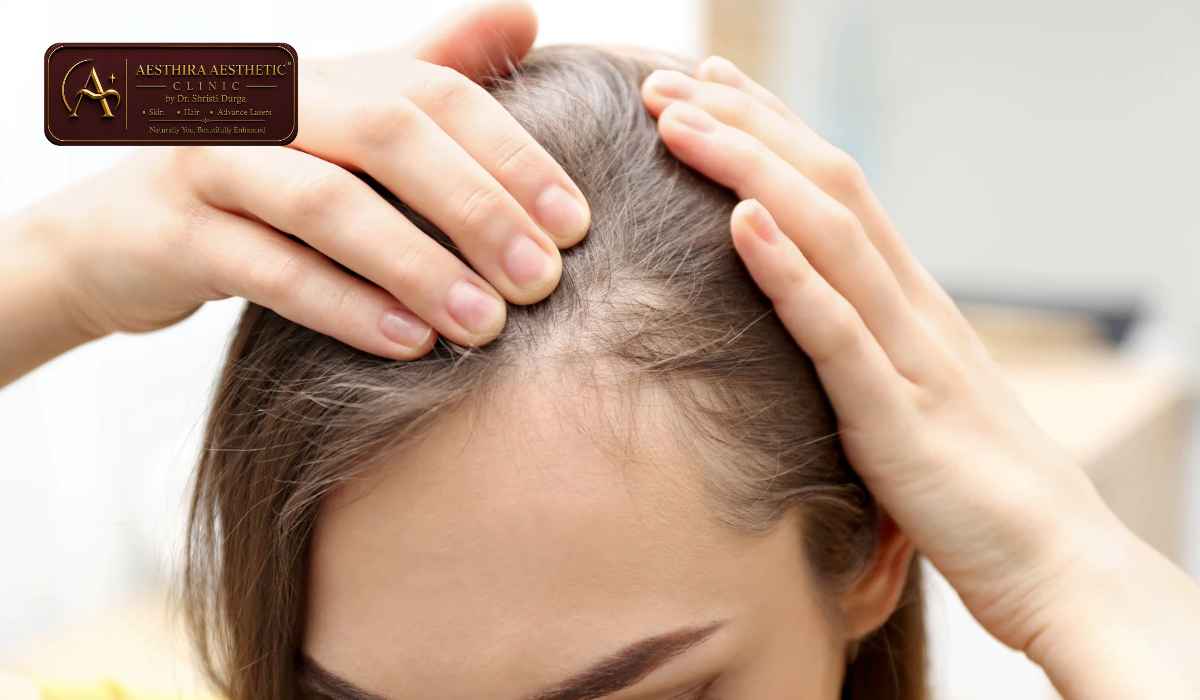
2. Gradual Hair Thinning
Gradual thinning occurs when hair strands become progressively finer or hair density decreases over time.
Common signs include:
- A widening centre parting
- Reduced density around the crown
- A thinner ponytail
- More visible scalp under bright light
- Reduced hair volume over several months or years
This pattern may be associated with female pattern hair loss.
3. Patchy Hair Loss
Patchy hair loss causes noticeable areas where hair is missing.
These patches may be round, oval, or irregular.
Possible causes include alopecia areata, traction alopecia, and certain inflammatory scalp conditions.
Because some forms of patchy hair loss can progress or lead to permanent damage, early medical assessment is important.
What Are the Most Common Types of Female Hair Loss?
Understanding the type of hair loss is essential because different conditions require different treatment approaches.
1. Female Pattern Hair Loss (Androgenetic Alopecia)
Female pattern hair loss is one of the most common causes of progressive hair thinning in women.
It occurs when genetically susceptible hair follicles gradually produce thinner, shorter strands through a process known as follicular miniaturisation.
Unlike some forms of temporary shedding, female pattern hair loss usually develops gradually.
Common signs include:
- A widening middle parting
- Progressive thinning over the crown
- Reduced hair density
- Fine or shorter strands in affected areas
- Gradual loss of overall hair volume
Female pattern hair loss becomes more common with age, particularly around and after menopause, but it can also begin in younger women.
Although it is often described as hormonal hair loss, many affected women have normal circulating hormone levels.
Early diagnosis can help slow progression and improve treatment outcomes.
2. Telogen Effluvium
Telogen effluvium is a common cause of sudden, excessive hair shedding.
It occurs when a physical or emotional stressor disrupts the normal hair growth cycle, causing more follicles than usual to enter the resting phase.
Common triggers include:
- High fever or significant illness
- Childbirth
- Major emotional stress
- Surgery
- Rapid weight loss
- Restrictive dieting
- Certain medications
Hair shedding often begins approximately two to three months after the triggering event.
In many cases, telogen effluvium is temporary, and hair gradually regrows after the underlying trigger resolves.
3. Alopecia Areata
Alopecia areata is an autoimmune condition in which the immune system attacks hair follicles.
It commonly causes sudden, round or oval patches of hair loss.
Some people experience a single patch, while others develop more extensive hair loss.
The course of alopecia areata is unpredictable. Hair may regrow, but the condition can also recur.
It requires medical evaluation, and treatment differs from the approaches commonly used for female pattern hair loss.
4. Traction Alopecia
Traction alopecia develops when repeated tension from certain hairstyles damages hair follicles.
It may occur with:
- Very tight ponytails
- Tight buns or braids
- Heavy hair extensions
- Hairstyles that repeatedly pull on the hairline
Early traction alopecia may improve when the source of tension is removed.
However, prolonged traction can cause permanent follicle damage and lasting hair loss.
Female Hair Loss Types: Quick Comparison
| Type of hair loss | Common appearance | Possible cause | Recovery outlook |
| Female pattern hair loss | Gradual thinning and widening parting | Genetic and hormonal influences | Often manageable, but usually progressive |
| Telogen effluvium | Sudden, diffuse shedding | Illness, stress, childbirth, or other triggers | Frequently temporary |
| Alopecia areata | Round or patchy bald areas | Autoimmune activity | Variable; requires medical evaluation |
| Traction alopecia | Hair loss near areas under tension | Repeated pulling from hairstyles | May improve early; prolonged cases can become permanent |
These patterns can overlap, so visual appearance alone is not always enough for a diagnosis.
If you notice persistent shedding or reduced hair density, explore Hair Fall & Thinning Hair Management at Aesthira Aesthetic.
How Does PCOS Cause Hair Loss in Women?
Polycystic Ovary Syndrome (PCOS) is a hormonal and metabolic condition that can affect menstrual cycles, skin health, and hair growth.
Some women with PCOS experience increased androgen activity, which may contribute to scalp hair thinning in genetically susceptible follicles.
Androgens are hormones naturally present in both men and women. Increased levels or greater follicular sensitivity to these hormones can contribute to female pattern hair loss.
What Does PCOS Hair Loss Look Like?
PCOS-related hair thinning often affects the central scalp and crown.
Possible signs include:
- Widening of the centre parting
- Gradual reduction in hair density
- Thinner hair strands
- Increased visibility of the scalp
- Progressive hair thinning over time
Some women may also experience increased shedding, particularly when another trigger is present.
What Other Symptoms Can Occur With PCOS?
Hair thinning may occur alongside:
- Irregular menstrual periods
- Persistent acne
- Increased facial or body hair growth
- Difficulty managing weight
- Other signs of hormonal imbalance
However, hair loss alone does not mean a woman has PCOS.
Female pattern hair loss can occur without PCOS and without abnormal hormone levels.
A medical evaluation is needed to determine whether hormonal testing or further assessment is appropriate.
Can PCOS Hair Loss Be Reversed?
The outlook depends on the cause, duration, and severity of thinning.
If PCOS is contributing to ongoing follicular miniaturisation, treatment may help slow progression and support hair regrowth.
However, controlling PCOS does not automatically restore lost hair density.
Some women also require treatment specifically directed at female pattern hair loss.
Early assessment is important because longstanding follicular miniaturisation may become harder to reverse.
Can Thyroid Problems Cause Hair Fall in Women?
Yes. Both an underactive thyroid (hypothyroidism) and an overactive thyroid (hyperthyroidism) can contribute to hair shedding or thinning.
The thyroid gland produces hormones that help regulate metabolism and several processes involved in normal hair growth.
When thyroid hormone levels are significantly disrupted, hair follicles may shift out of their usual growth cycle.
Signs of Hair Loss Associated With Thyroid Problems
Thyroid-related hair loss often appears as diffuse thinning rather than a single bald patch.
Other symptoms may include:
- Unusual tiredness
- Changes in body weight
- Increased sensitivity to heat or cold
- Changes in menstrual cycles
- Dry skin
- Altered bowel habits
- Changes in heart rate
The presence of these symptoms does not confirm a thyroid disorder, but they may help a clinician decide whether thyroid testing is needed.
Does Thyroid Hair Loss Grow Back?
Hair regrowth is often possible when the underlying thyroid disorder is appropriately treated.
However, improvement may take several months because the hair growth cycle responds gradually.
If thinning continues despite well-controlled thyroid function, other causes may also need investigation.
Can Iron Deficiency Cause Hair Loss in Women?
Iron is essential for several functions in the body, including oxygen transport and normal cellular activity.
Iron deficiency, particularly when significant or associated with anaemia, can contribute to diffuse hair shedding.
Women may be more susceptible to iron deficiency due to menstrual blood loss, pregnancy-related nutritional demands, or insufficient dietary intake.
Common Signs of Iron Deficiency
Possible symptoms include:
- Persistent fatigue
- Weakness
- Dizziness
- Pale skin
- Reduced exercise tolerance
- Shortness of breath in more significant cases
Some women have low iron stores without obvious symptoms.
What Is Ferritin and Why Does It Matter?
Ferritin is a protein that stores iron in the body.
A ferritin blood test helps assess iron reserves and can be useful when iron deficiency is suspected.
However, ferritin levels must be interpreted alongside medical history, other blood results, and possible inflammation.
Low ferritin does not automatically explain every case of hair loss.
Can Iron Supplements Stop Hair Fall?
Iron supplementation may be recommended when a clinically relevant deficiency is confirmed.
Correcting iron deficiency can improve general health and may support hair recovery when deficiency is contributing to shedding.
Taking iron unnecessarily is not recommended because excessive iron intake can cause adverse effects.
A clinician should determine whether supplementation is needed and which dose is appropriate.
Can Vitamin Deficiencies Contribute to Female Hair Loss?
Certain nutritional deficiencies may affect hair growth, particularly when they are significant or occur alongside restrictive eating patterns.
Vitamin B12
Vitamin B12 supports red blood cell production and normal neurological function.
Deficiency may be relevant in people with certain dietary restrictions, absorption problems, or associated anaemia.
However, vitamin B12 supplements are not a proven hair regrowth treatment for women who already have adequate levels.
Vitamin D
Vitamin D plays a role in several biological processes, including hair follicle function.
Low vitamin D levels have been observed in some hair loss conditions, but the relationship is complex.
Routine supplementation does not guarantee improved hair growth unless a deficiency or another clinical indication is present.
Zinc
Significant zinc deficiency can contribute to hair changes, including hair loss.
However, high-dose zinc supplementation without a confirmed need can cause other nutritional imbalances.
Protein Deficiency
Hair is primarily composed of keratin, a protein.
Inadequate protein intake, severe calorie restriction, or rapid weight loss can disrupt the hair growth cycle.
Maintaining balanced nutrition is important for overall hair health.
Important: Hair supplements should not replace an assessment of persistent shedding or thinning.
Why Does Hair Fall Increase After Childbirth, Illness, or Stress?
Many women experience noticeable hair shedding after a major physical or emotional event.
This is often associated with telogen effluvium.
Postpartum Hair Loss
During pregnancy, hormonal changes can reduce normal hair shedding, making the hair appear fuller.
After childbirth, hormone levels change, and a greater number of hairs may enter the shedding phase.
Postpartum hair shedding commonly becomes noticeable a few months after delivery.
In many cases, this is temporary, and hair gradually regains its usual growth pattern.
Hair Fall After Fever or Illness
Significant illnesses, high fever, or surgery can temporarily disrupt the hair growth cycle.
Hair shedding may begin several weeks or months after recovery.
Because the delay can be substantial, women may not immediately connect the shedding to the earlier illness.
Hair Loss After Emotional Stress
Major emotional stress may contribute to temporary diffuse hair shedding.
However, not every episode of hair loss is caused by stress.
Persistent shedding should not automatically be attributed to stress without considering other possible causes.
How Long Does Temporary Hair Shedding Last?
Acute telogen effluvium often improves over three to six months after shedding begins, although returning to the previous hair volume can take longer.
The timeline depends on the underlying trigger, general health, and whether additional hair loss conditions are present.
If shedding continues beyond six months or progresses to visible thinning, further assessment is advisable.
Which Blood Tests May Be Recommended for Female Hair Loss?
Blood tests can help investigate certain underlying causes of hair loss.
However, not every woman experiencing hair fall needs the same blood tests.
A clinician usually selects investigations after reviewing medical history, symptoms, menstrual patterns, diet, medication use, and scalp examination findings.
1. Complete Blood Count (CBC)
A CBC measures blood components, including haemoglobin.
It can help identify anaemia, which may be relevant when fatigue, heavy menstrual bleeding, or nutritional concerns are present.
2. Serum Ferritin and Iron Studies
Ferritin and other iron studies may be recommended when iron deficiency is suspected.
They can help assess iron stores and support interpretation of possible deficiency.
3. Thyroid Function Tests
Thyroid-stimulating hormone (TSH), sometimes followed by free thyroid hormone testing, may help investigate suspected thyroid dysfunction.
These tests can be particularly relevant when hair loss occurs alongside symptoms suggestive of a thyroid disorder.
4. Vitamin B12 and Vitamin D Tests
These may be appropriate when dietary history, clinical symptoms, or medical conditions suggest a possible deficiency.
They are not necessarily required for every person with hair loss.
5. Hormonal Tests
Selected hormonal investigations may be recommended when hair thinning occurs alongside signs of androgen excess or possible PCOS.
Depending on the clinical situation, tests may include testosterone and other relevant androgen measurements.
Hormonal tests should be interpreted by a qualified clinician and considered alongside the complete clinical picture.
Female Hair Loss Blood Tests: Quick Reference
| Test | What it helps assess | When it may be considered |
| Complete Blood Count (CBC) | Anaemia and related blood changes | Suspected anaemia or relevant symptoms |
| Serum ferritin | Iron stores | Suspected iron deficiency or significant menstrual blood loss |
| Thyroid function tests | Thyroid hormone regulation | Symptoms suggesting thyroid dysfunction |
| Vitamin B12 | B12 status | Dietary restriction, absorption concerns, or relevant symptoms |
| Vitamin D | Vitamin D status | Suspected deficiency or other clinical indications |
| Hormonal investigations | Selected androgen or endocrine abnormalities | Irregular periods, excess facial hair, acne, or other hormonal signs |
Blood tests help identify possible contributing conditions, but they do not replace a scalp examination.
Normal blood test results also do not rule out female pattern hair loss.
How Is Female Hair Loss Diagnosed?
An accurate diagnosis begins with understanding the pattern of hair loss rather than immediately selecting a treatment.
Step 1: Medical and Hair Loss History
A clinician may ask:
- When did the hair loss begin?
- Is the hair shedding suddenly or thinning gradually?
- Has there been a recent illness or stressful event?
- Are menstrual cycles regular?
- Is there a family history of hair thinning?
- Have any medications or diets changed?
- Are there symptoms such as scalp itching or pain?
These details can help narrow down possible causes.
Step 2: Scalp Examination
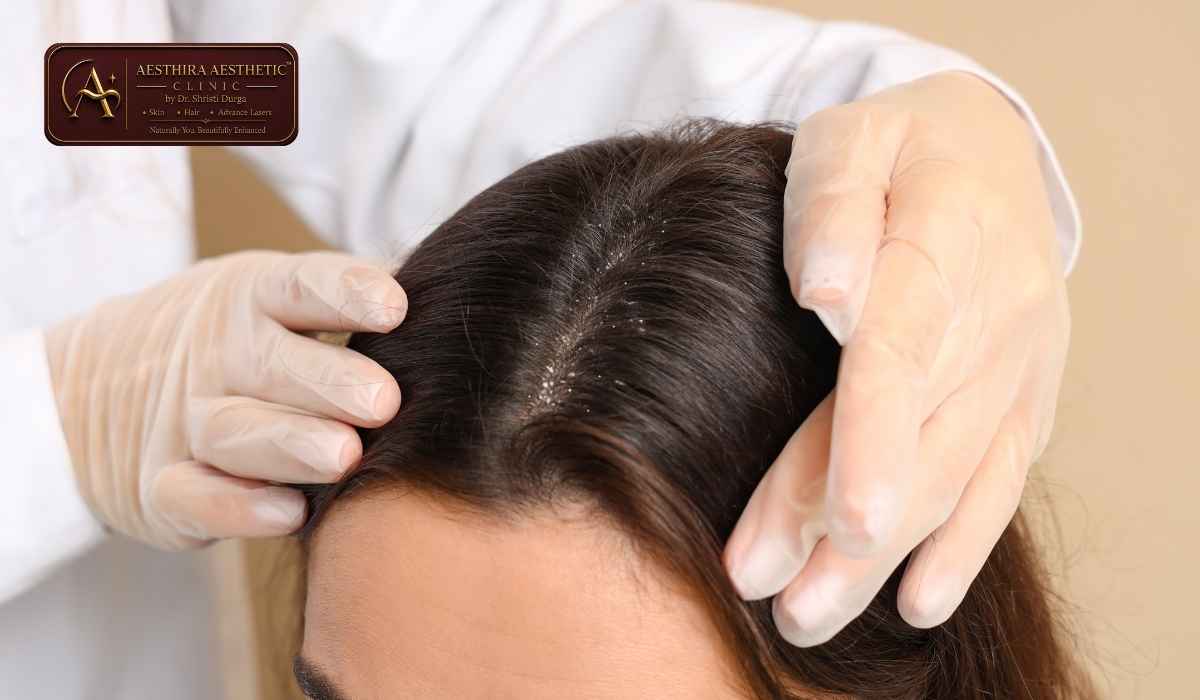
A physical scalp examination looks for visible patterns of hair loss, inflammation, scaling, follicular changes, or signs of scarring.
The clinician may also assess whether hair strands are breaking or shedding from the roots.
Step 3: Trichoscopy and Hair Analysis
Trichoscopy is a magnified examination of the hair and scalp using a specialised device.
It can help assess:
- Hair shaft diameter
- Variation in hair thickness
- Scalp condition
- Follicular openings
- Signs of inflammation
- Patterns suggestive of different hair disorders
Hair analysis can provide useful additional information, although it cannot independently diagnose every medical cause of hair loss.
Aesthira Aesthetic offers Advanced Hair & Scalp Analysis to support the assessment of hair density and scalp concerns.
Step 4: Targeted Investigations
When indicated, blood tests or further medical investigations may be recommended.
In selected cases where the diagnosis remains uncertain, a dermatologist may recommend a scalp biopsy.
Step 5: Individualised Treatment Planning
Once the likely cause is understood, suitable management can be discussed.
The plan may involve medical treatment, correction of an underlying condition, scalp care, or selected hair restoration procedures.
What Are the Best Treatments for Female Hair Loss?
The most effective treatment depends on the type and cause of hair loss.
A procedure that may help certain women with pattern thinning may offer little benefit to someone experiencing temporary shedding caused by a recent illness.
1. Treating the Underlying Medical Cause
If hair loss is linked to a medical condition, addressing that condition is an important first step.
Examples include:
- Managing thyroid dysfunction
- Correcting confirmed iron deficiency
- Assessing and managing PCOS where appropriate
- Treating inflammatory scalp conditions
- Reviewing medications that may contribute to shedding
Improvement depends on the underlying diagnosis and the response to treatment.
2. Medical Treatment for Female Pattern Hair Loss
Topical minoxidil is an established treatment option for female pattern hair loss.
It may help slow thinning and improve growth in some women when used consistently.
Results usually take several months, and continued use is generally needed to maintain benefits.
Some women may also be prescribed other medicines, such as selected anti-androgen treatments, under appropriate medical supervision.
Women who are pregnant, planning pregnancy, or breastfeeding should discuss treatment safety with their doctor. Minoxidil and certain prescription hair loss medicines may be unsuitable.
Self-medication is not recommended.
3. PRP Hair Restoration Therapy
Platelet-Rich Plasma (PRP) therapy is a minimally invasive procedure that uses a concentrated preparation of platelets obtained from the patient’s own blood.
The plasma is injected into selected scalp areas with the aim of supporting follicular activity.
PRP may improve hair density or thickness in some patients with androgenetic alopecia, including female pattern hair loss.
However, outcomes vary, treatment protocols differ, and multiple sessions may be required.
PRP is not a guaranteed cure for hair loss and is not routinely necessary for uncomplicated temporary shedding.
Learn more about PRP Hair Restoration Therapy at Aesthira Aesthetic.
4. Growth Factor Concentrate (GFC) Therapy
Growth Factor Concentrate (GFC) therapy is another platelet-derived treatment approach used in hair restoration.
It involves preparing growth-factor-rich material for administration to selected scalp areas.
Some studies suggest potential benefits for androgenetic alopecia.
However, the comparative evidence remains limited, and it has not been conclusively established that GFC is superior to PRP.
Treatment selection should depend on diagnosis, available evidence, individual suitability, and a discussion of realistic expectations.
5. Microneedling for Hair Growth
Scalp microneedling involves creating controlled micro-injuries using fine sterile needles.
It is sometimes used alongside established hair loss treatments.
Some evidence suggests that microneedling may improve outcomes for selected patients with androgenetic alopecia when combined with other treatments.
However, the ideal technique, frequency, and long-term benefits are still being studied.
Microneedling is not appropriate for every type of hair loss, especially when active infection or certain inflammatory scalp conditions are present.
Explore Microneedling for Hair Growth at Aesthira Aesthetic.
6. Scalp Health Management
Healthy scalp conditions can support normal hair growth.
Problems such as persistent dandruff, inflammation, or scalp infections may need treatment when they contribute to discomfort, breakage, or shedding.
However, treating dandruff alone will not reverse every form of female pattern hair loss.
A scalp assessment can help determine whether a scalp condition requires attention alongside hair thinning.
7. Nutritional Support and Lifestyle Changes
Maintaining adequate protein, iron, and overall nutritional intake is important for normal hair growth.
Supportive measures include:
- Eating a balanced diet
- Avoiding crash diets
- Managing identified deficiencies
- Choosing hairstyles that do not pull tightly
- Reducing excessive heat and chemical damage
- Maintaining appropriate scalp hygiene
These habits can support hair health, but they do not replace medical treatment when a progressive hair loss condition is present.
Which Female Hair Loss Treatment Is Right for You?
The following table explains why diagnosis matters before beginning hair restoration treatment.
| Hair loss concern | Common management approach |
| Female pattern hair loss | Evidence-based medical treatments; selected procedural options |
| PCOS-associated thinning | Medical assessment, management of PCOS, and treatment directed at pattern hair loss |
| Thyroid-related shedding | Appropriate thyroid treatment and follow-up |
| Iron deficiency-related shedding | Correction of confirmed deficiency |
| Temporary telogen effluvium | Addressing the trigger, reassurance, and monitoring |
| Alopecia areata | Dermatologist-directed treatment |
| Traction alopecia | Removing tension and treating persistent follicular damage |
| Hair loss with scalp inflammation | Diagnosis and treatment of the underlying scalp disorder |
The right approach is not necessarily the most advanced procedure. It is the treatment that addresses the actual cause.
How Long Does It Take to See Hair Regrowth Results?
Hair growth is a gradual biological process.
Even when an underlying condition has been successfully treated, visible improvement may take time.
For Temporary Hair Shedding
Acute telogen effluvium often begins to settle within a few months after its trigger has resolved.
Regaining the previous hair volume may take considerably longer.
For Female Pattern Hair Loss
Established treatments such as topical minoxidil often require approximately six to twelve months of consistent use to assess the full response.
Some patients notice changes earlier, while others experience stabilisation rather than obvious regrowth.
For PRP and Other Procedural Treatments
Response times vary according to the treatment protocol, diagnosis, and individual hair growth cycle.
A series of sessions and follow-up assessments may be needed before the outcome can be meaningfully evaluated.
Rather than expecting immediate results, patients should focus on measurable changes in shedding, hair density, part width, and scalp health.
Can Female Hair Loss Be Prevented?
Not every type of hair loss can be prevented.
For example, inherited female pattern hair loss cannot be reliably prevented through shampoos, oils, or supplements alone.
However, some avoidable contributors to hair damage and excessive shedding can be reduced.
Avoid Very Tight Hairstyles
Repeated pulling can damage follicles, particularly around the hairline.
Choose comfortable hairstyles that minimise constant scalp tension.
Avoid Extreme Dieting
Rapid weight loss and inadequate nutrition can disrupt the hair growth cycle.
A balanced diet helps support overall health and normal hair growth.
Address Persistent Scalp Problems
Ongoing itching, redness, scaling, or discomfort should be evaluated rather than repeatedly covered with cosmetic products.
Manage Medical Conditions
Appropriate management of thyroid disorders, iron deficiency, and relevant hormonal conditions can help address contributing factors.
Seek Early Assessment for Progressive Thinning
A widening parting or gradual reduction in density may be an early sign of female pattern hair loss.
Early evaluation can help identify treatment options before thinning becomes more advanced.
When Should You Seek Medical Advice for Hair Loss?
Not every episode of hair shedding requires treatment, but certain symptoms warrant professional evaluation.
Consider seeking medical advice if:
- Hair shedding is sudden or unusually heavy.
- Your centre parting is becoming progressively wider.
- You notice round or irregular bald patches.
- Your scalp feels painful, inflamed, or unusually sensitive.
- You experience persistent redness, scaling, or pustules.
- Hair loss occurs alongside irregular periods or other hormonal symptoms.
- You notice significant fatigue or other symptoms of possible nutritional deficiency.
- Thinning continues for several months without improvement.
- You are losing hair around the hairline due to tight hairstyles.
- You have tried multiple products without understanding the cause of the problem.
Sudden, rapidly progressing loss with scalp pain, inflammation, or signs of scarring should be assessed promptly by a dermatologist.
How Is Female Hair Loss Assessed at Aesthira Aesthetic in Indirapuram?
Managing hair loss begins with understanding whether the concern involves temporary shedding, progressive thinning, or an underlying scalp condition.
At Aesthira Aesthetic, consultations are designed to evaluate hair and scalp concerns before discussing suitable treatment options.
Step 1: Understanding Your Hair Concerns
The consultation starts with discussing hair fall, changes in density, relevant medical history, and previous treatments.
A recent illness, dietary change, or hormonal concern may help guide the next steps.
Step 2: Advanced Hair and Scalp Analysis
Aesthira Aesthetic offers advanced hair and scalp analysis using diagnostic technology to evaluate visible scalp and hair characteristics.
The assessment can help document hair density, follicular appearance, and scalp condition.
Medical investigations may still be needed when an underlying disease or deficiency is suspected.
Step 3: Identifying Suitable Treatment Options
Following assessment, available hair management or restoration options can be discussed according to individual needs.
Where hormonal, thyroid, nutritional, or other medical issues are suspected, evaluation by an appropriately qualified medical professional is important.
Step 4: Personalised Hair Care Planning
Different hair concerns may require different approaches.
Treatment recommendations should consider the likely diagnosis, scalp condition, expected benefits, possible risks, and realistic outcomes.
Step 5: Monitoring Hair and Scalp Health
Hair regrowth and density changes take time.
Follow-up assessments can help monitor progression and determine whether the management approach needs adjustment.
Why Choose Aesthira Aesthetic for Female Hair Loss Treatment in Indirapuram?
Choosing a suitable clinic for hair loss concerns involves more than selecting a treatment by name.
A useful consultation should help you understand why your hair is shedding or thinning and what approaches may be appropriate.
Aesthira Aesthetic is a skin, hair, and aesthetic clinic in Indirapuram, Ghaziabad, offering hair and scalp assessment alongside hair restoration services.
1. Personalised Hair and Scalp Consultations
Aesthira Aesthetic emphasises understanding individual concerns before recommending treatments.
This matters because temporary hair shedding, PCOS-associated thinning, and female pattern hair loss require different management strategies.
2. Advanced Hair and Scalp Analysis
The clinic offers technology-assisted hair and scalp analysis to help evaluate visible changes in hair density and scalp condition.
This can support treatment planning and ongoing assessment.
3. Multiple Hair Restoration Options
Aesthira Aesthetic lists services including PRP hair restoration, hair microneedling, and customised hair regrowth treatments.
Having different options allows patients to discuss which, if any, may be appropriate after assessment.
4. Focus on Individual Hair Concerns
Hair loss treatment should consider factors such as age, hormonal history, scalp health, pattern of thinning, and previous treatments.
Aesthira Aesthetic’s stated approach is based on personalised treatment planning rather than a single solution for every patient.
5. Convenient Location in Indirapuram, Ghaziabad
For individuals searching for female hair loss treatment in Indirapuram, Aesthira Aesthetic provides a local option for hair and scalp consultations.
Whether you are experiencing excessive hair fall, a widening parting, or reduced hair density, an initial assessment can help determine the most appropriate next steps.
Conclusion
Female hair loss is not always caused by poor hair care or a lack of vitamins.
It may involve genetic factors, hormonal conditions such as PCOS, thyroid dysfunction, iron deficiency, temporary shedding after illness, or an underlying scalp disorder.
The most important distinction is whether the hair is shedding temporarily, thinning progressively, or being lost in patches.
An accurate diagnosis makes it possible to select treatment based on the cause rather than relying on products or procedures that may not address the actual problem.
Some women experience natural regrowth after a temporary trigger resolves. Others benefit from targeted medical management or carefully selected hair restoration treatments.
If you are noticing persistent hair fall, a widening parting, or reduced hair density, seeking an appropriate assessment can help you understand your options.
Book Your Hair and Scalp Consultation at Aesthira Aesthetic
Concerned about excessive hair fall, female pattern hair loss, or gradual hair thinning?
At Aesthira Aesthetic, the focus is on understanding your scalp and hair concerns and discussing personalised treatment options.
Clinic: Aesthira Aesthetic
Address: H. No. 14, Shop No. 4, Niti Khand-2, Indirapuram, Ghaziabad, Uttar Pradesh – 201014
Website: www.aesthiraaesthetic.com
Book a Consultation: Contact Aesthira Aesthetic
Start with a professional hair and scalp assessment to understand what may be contributing to your hair loss and which next steps are suitable for your needs.
Frequently Asked Questions
1. What is the most common cause of hair loss in women?
Female pattern hair loss, also known as androgenetic alopecia, is the most common cause of progressive hair thinning in women. It is associated with genetic and hormonal influences and commonly causes widening of the centre parting. Other frequent causes of shedding include telogen effluvium, illness, childbirth, and nutritional deficiencies.
2. Can PCOS cause permanent hair thinning?
PCOS can contribute to female pattern hair loss in some women. If follicular miniaturisation progresses over time, hair density may become increasingly difficult to restore. Early medical assessment and appropriate treatment may help slow progression and improve hair growth, but recovery varies.
3. Does thyroid-related hair loss grow back?
Hair loss associated with thyroid dysfunction can often improve after thyroid hormone levels are appropriately managed. However, regrowth may take several months. If hair thinning continues despite treatment, other contributing causes may need to be investigated.
4. Which vitamin deficiencies may contribute to hair loss?
Certain nutritional deficiencies, including significant vitamin B12, vitamin D, or zinc deficiency, may be relevant in some cases. Iron deficiency and inadequate protein intake can also contribute to shedding. Testing and supplementation should be based on individual medical assessment rather than taking multiple supplements unnecessarily.
5. Is hair thinning along the centre parting a warning sign?
Yes. A progressively widening centre parting can be an early sign of female pattern hair loss. However, other conditions may also affect hair density. A scalp examination can help identify whether the change is caused by follicular miniaturisation or another problem.
6. What blood tests should I discuss with a doctor for hair fall?
Depending on symptoms and medical history, a doctor may consider a complete blood count, serum ferritin, thyroid function tests, or selected nutritional and hormonal investigations. Not every woman needs every test, and normal results do not rule out all forms of hair loss.
7. Can female hair loss happen without PCOS?
Yes. Female hair loss can occur without PCOS or any measurable hormonal imbalance. Genetics, temporary shedding, thyroid conditions, iron deficiency, autoimmune disorders, scalp inflammation, and certain medications are among the other possible causes.
8. Can PRP help female pattern hair loss?
PRP may improve hair density or thickness in some women with female pattern hair loss. However, treatment outcomes vary, and it is not a guaranteed cure. PRP is generally considered a potential adjunct to established medical treatment rather than a replacement for accurate diagnosis.
9. How long does it take for hair density to improve?
The timeline depends on the cause. Temporary shedding may begin improving within several months after the trigger resolves, while female pattern hair loss treatments often require six to twelve months to assess their effectiveness. Regrowth and visible density improvement vary between individuals.
10. Where can I get female hair loss and scalp analysis in Indirapuram?
You can enquire about hair and scalp assessment at Aesthira Aesthetic, Niti Khand-2, Indirapuram, Ghaziabad. The clinic offers advanced hair and scalp analysis, hair fall management, and selected hair restoration services. Visit www.aesthiraaesthetic.com or the contact page to request an appointment.